
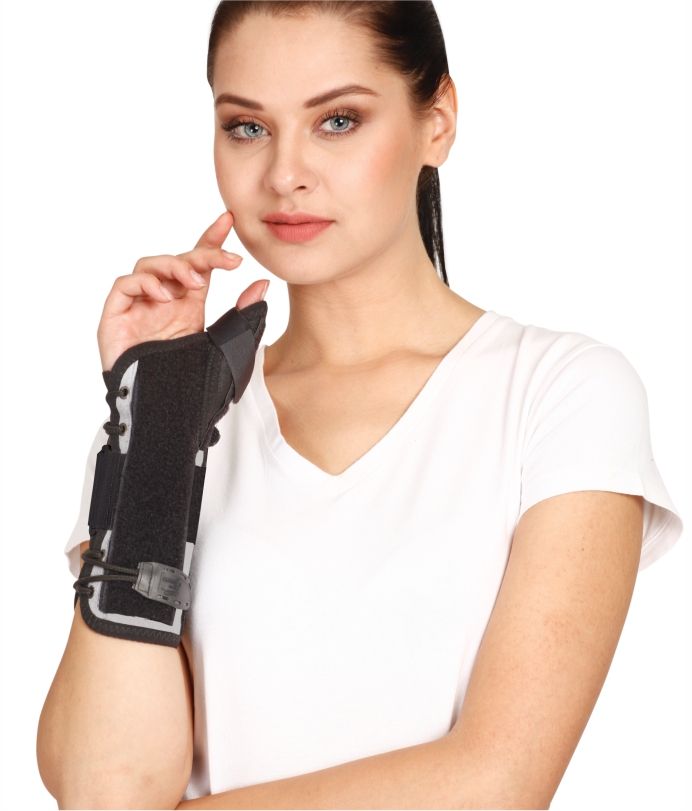
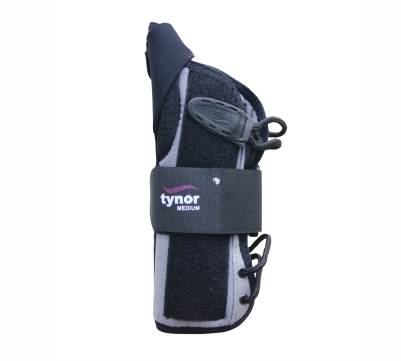
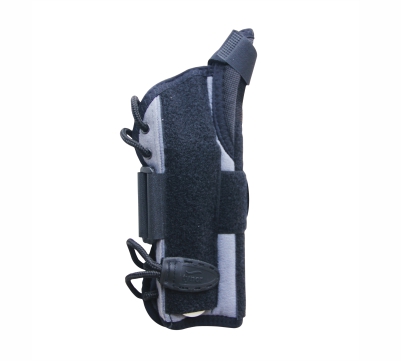
The Tynor Wrist Splint with thumb support is designed to stabilize the wrist and thumb joint during recovery from injuries, sprains, or ligament strain. It helps immobilize the affected area while allowing controlled movement of surrounding muscles for improved comfort during rehabilitation.
This orthopedic support is made using breathable and skin-friendly materials that ensure comfort during prolonged wear. The splint provides firm support to the wrist while maintaining proper thumb alignment, which helps reduce strain on the injured joint.
Healthcare professionals often recommend the Tynor Wrist Splint for individuals suffering from wrist sprains, ligament injuries, or repetitive strain conditions. The ergonomic design helps maintain proper wrist positioning and prevents excessive movement that may delay healing.
Key Features
- Provides wrist and thumb immobilization support
- Helps maintain proper joint alignment
- Breathable material for comfortable use
- Adjustable straps for customized compression
- Suitable for rehabilitation and injury recovery
Benefits of Using Tynor Wrist Splint
The Tynor Wrist Splint helps stabilize the wrist and thumb joint, reducing unnecessary movement during recovery. Therefore, it is commonly used in orthopedic rehabilitation and injury management.
Furthermore, maintaining proper wrist positioning helps reduce stress on ligaments and tendons. Because of this, wrist splints are widely recommended for both medical treatment and home recovery.
Who Should Use This Wrist Support
- Individuals with wrist sprains or ligament injuries
- People experiencing thumb joint instability
- Patients recovering from wrist strain
- Individuals undergoing wrist rehabilitation
- People requiring wrist immobilization support
Proper wrist stabilization plays an important role in preventing additional strain and promoting faster healing. Orthopedic splints help maintain alignment and provide reliable support during daily activities.
Using wrist supports during recovery can also help prevent accidental overuse of injured joints, which supports safer rehabilitation outcomes.
For more information about patient safety and injury prevention practices, refer to the WHO patient safety resources below.
WHO – Patient Safety Guidelines
You can explore more orthopedic supports here:
Orthopedic Supports Collection.

Reviews
There are no reviews yet.